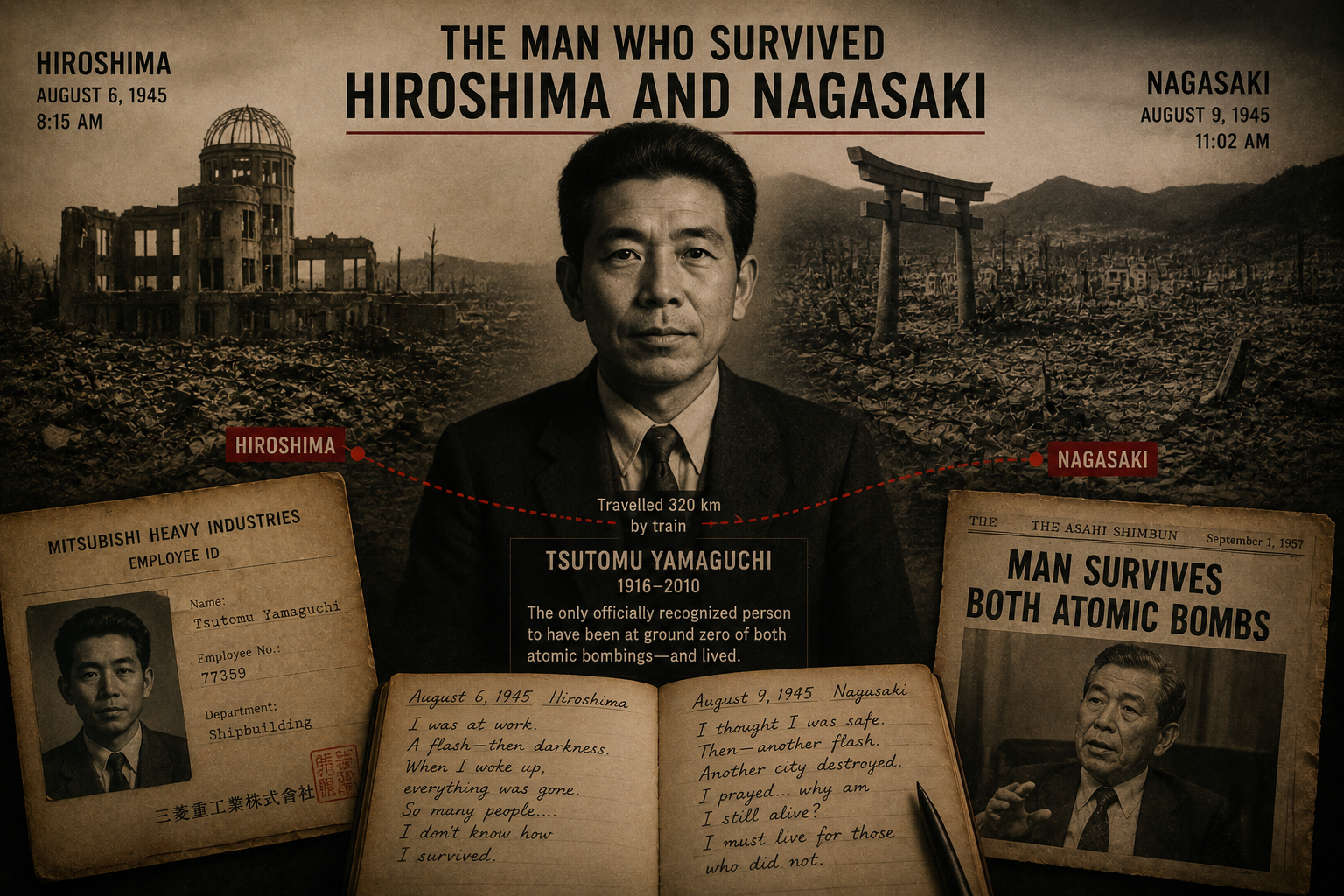
The Unbreakable Survivor: Yamaguchi's Atomic Escape
"Tsutomu Yamaguchi's world imploded not once, but twice in the span of three days. Surviving both Hiroshima and Nagasaki, his story defies belief."
What Happened?
Tsutomu Yamaguchi's story is one of extraordinary survival. On August 6, 1945, in Hiroshima, an atomic bomb explosion thrust him into chaos, merely two miles away from ground zero. Burned but alive, he returned to his hometown of Nagasaki. Three days later, on August 9, while sharing his harrowing experience with colleagues, another atomic bomb detonated, engulfing the city with catastrophic force. Remarkably, Yamaguchi survived once more, becoming the only individual officially recognized for surviving both atomic bombings. His tale is a testimony to human fortitude and raises haunting questions about war, peace, and the strength of human will.
Takeaway
The lesson this story keeps teaching
“Survival through chaos reveals resilience and the perpetuation of human ingenuity against adversity.”
Why People Are Talking About This
Tsutomu Yamaguchi’s story is not simply that of personal survival; it is a narrative spelling caution and possibility. His rare fortune—surviving two atomic blasts—forces a reconsideration of warfare's moral compass and humanity's resilience under apocalyptic stress. It asks a deeper question echoed through generations: what countries gain by retaining weapons of such devastating capacity?
The dialogue Yamaguchi catalyzed extends beyond policy; it reaches into the ethical debates surrounding technological progress and its potential for both creation and destruction. His life, marked by such awe-inspiring tenacity, continues to engage global leaders, educators, and historians alike toward a future less marred by fear and fortified by diplomacy.
Thread Map
9 entities · 8 connections · Hover to explore, click to inspect
This is the connection map for this thread. Every node is a person, company, event, or idea. The red lines show how they connect. Hover a node to highlight its connections. Click a node to see why it matters to this story.
How We Got Here
Yamaguchi Begins
Tsutomu Yamaguchi was born into a Japanese family. He would later become one of the most enigmatic figures in history due to his dual survival story.
A Fateful Decision
The United States resolved to use atomic bombs in Japan. Despite opposition, President Truman endorsed this course as a swift terminator of WWII. Little did anyone know, this would forever alter the fates of Yamaguchi and his nation.
Hiroshima Vanishes
The atomic bomb was dropped on Hiroshima. Tsutomu Yamaguchi experienced the explosion while on a business trip for Mitsubishi. His survival amidst the chaos marked the beginning of his extraordinary story.
Yamaguchi Returns Home
Following Hiroshima's devastation, Yamaguchi returned to his family in Nagasaki. Despite his injuries, he tried to inform others of the atomic disaster he had experienced.
Nagasaki's Doom
The second atomic bomb was unleashed on Nagasaki. In an unfathomable twist, Yamaguchi again survived. This time, he was at his workplace when the bomb struck.
Hibakusha Recognition
The Japanese government recognized hibakusha—survivors of the atomic bombings. Yamaguchi became one of them, symbolizing the human toll of nuclear war.
Rebuilding Hiroshima
Post-war reconstruction efforts began to transform Hiroshima from a devastated nuclear wasteland back to a burgeoning industrial hub. This recovery marked a relentless city-wide rebirth.
Death of a Survivor
Tsutomu Yamaguchi passed away at 93, having lived through the unimaginable. Even in death, his life remains a potent lesson against nuclear proliferation and war.
Wait... Who Is This?
Amidst the prelude to World War II's explosive crescendo, Japan's cities hummed with industry and anticipation. Nagasaki, known not only for its industrious spirit but also its cultural legacy, existed within a nation navigating modernity's swift currents. Tsutomu Yamaguchi's life was entrenched in this symphony of progress—a world where societal expectations and technological advancements intertwined.
Mitsubishi Heavy Industries, where Yamaguchi devoted his talents, stood as both witness and participant to wartime transformations. The engineer’s every task symbolized a cog within the greater enterprise of Japan's war-driven production machine. The uniformity of factory life juxtaposed starkly with the chaotic international theater that framed the twilight of an empire.
Imperial Japan’s aggressive expansionism painted a vivid albeit perilous backdrop against modern Japan's bustling innovation. Amidst rising tensions, cities found themselves unwittingly aligned within the crosshairs of unprecedented warfare. It was a pivotal era marked by immense sacrifice, ambition, and profound cultural shifts that would redefine global wartime strategies.
For men like Yamaguchi, each day resonated with urgency, personal pursuits blending with national duty. A trip to Hiroshima, part of routine industrial inspections, became a sudden pivot, yanking everyday lives into the cosmic scale of human history's most brutal testaments to invention and irretrievable loss.
Receipts
Tsutomu Yamaguchi - Wikipedia
The Man Who Survived Two Atomic Bombs | HISTORY
Tsutomu Yamaguchi: The Man Who Survived Both Atomic Bombings
Tsutomu Yamaguchi: The man who survived both atomic bombs - ABC News
Hibakusha: Stories of Survivors of Hiroshima and Nagasaki | PBS
Atomic bombings of Hiroshima and Nagasaki | Date, Significance, Timeline, Deaths, & Aftermath | Britannica
Same Pattern
Different story. Same lesson.
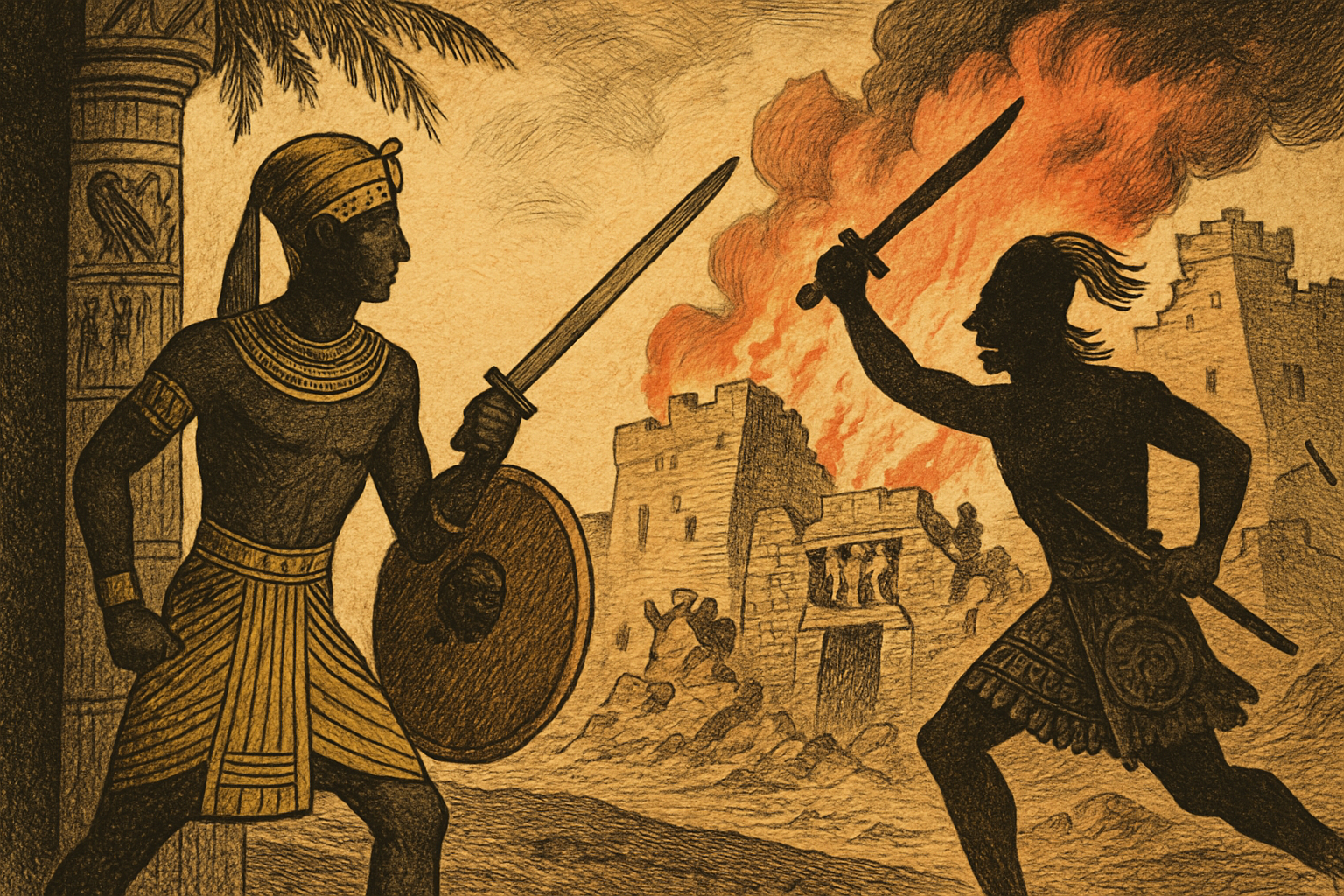
The Enigma of the Sea Peoples
In 1177 BCE, Ramses III faced an invasion that threatened to annihilate Egypt. These mysterious attackers, known only as the Sea Peoples, left a trail of destruction across the Mediterranean.
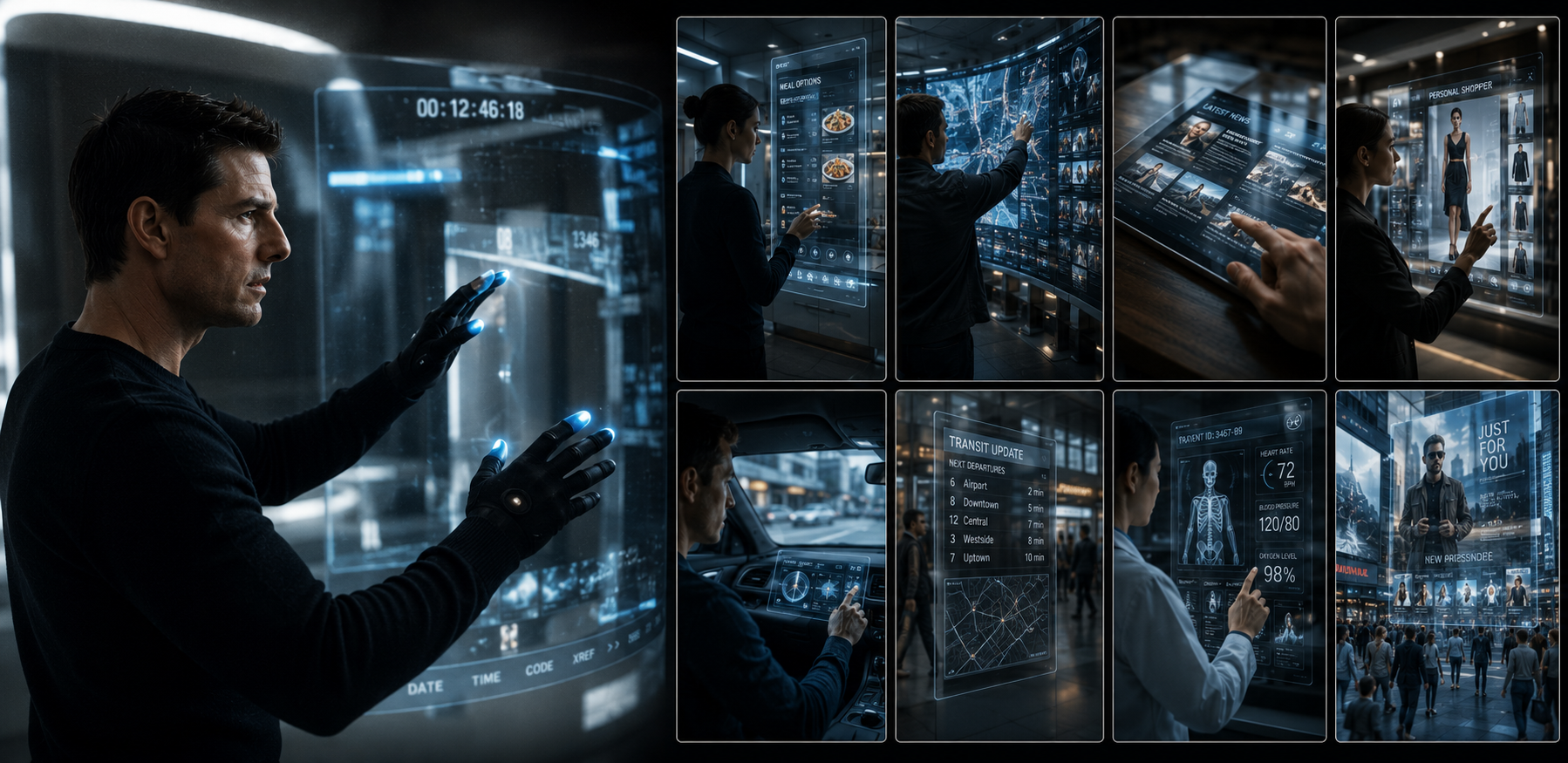
Minority Report's Prescient Touchscreen Reality
In 2002, Hollywood imagined a future of seamless touchscreen interfaces. Today, Steven Spielberg's vision feels eerily prescient as technology catches up.
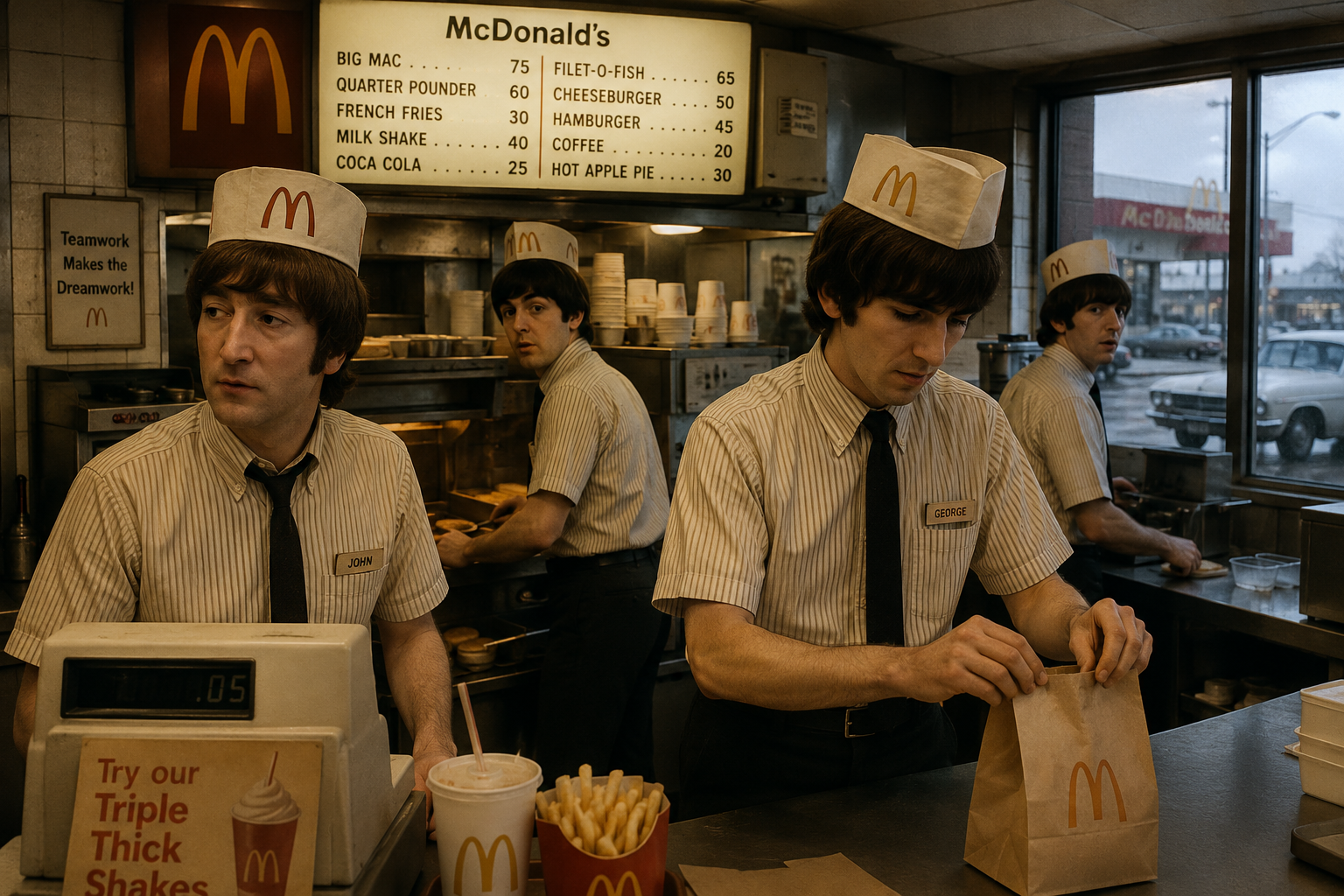
The Beatles Almost Never Happened
The Beatles were set to reunite, but catastrophe struck. A turn of events left fans with what could have been.

Back to the Future II Unveiled Tomorrow
Hoverboards, video calls, and wearable tech were once dreams. Somehow, a 1989 film saw them coming.
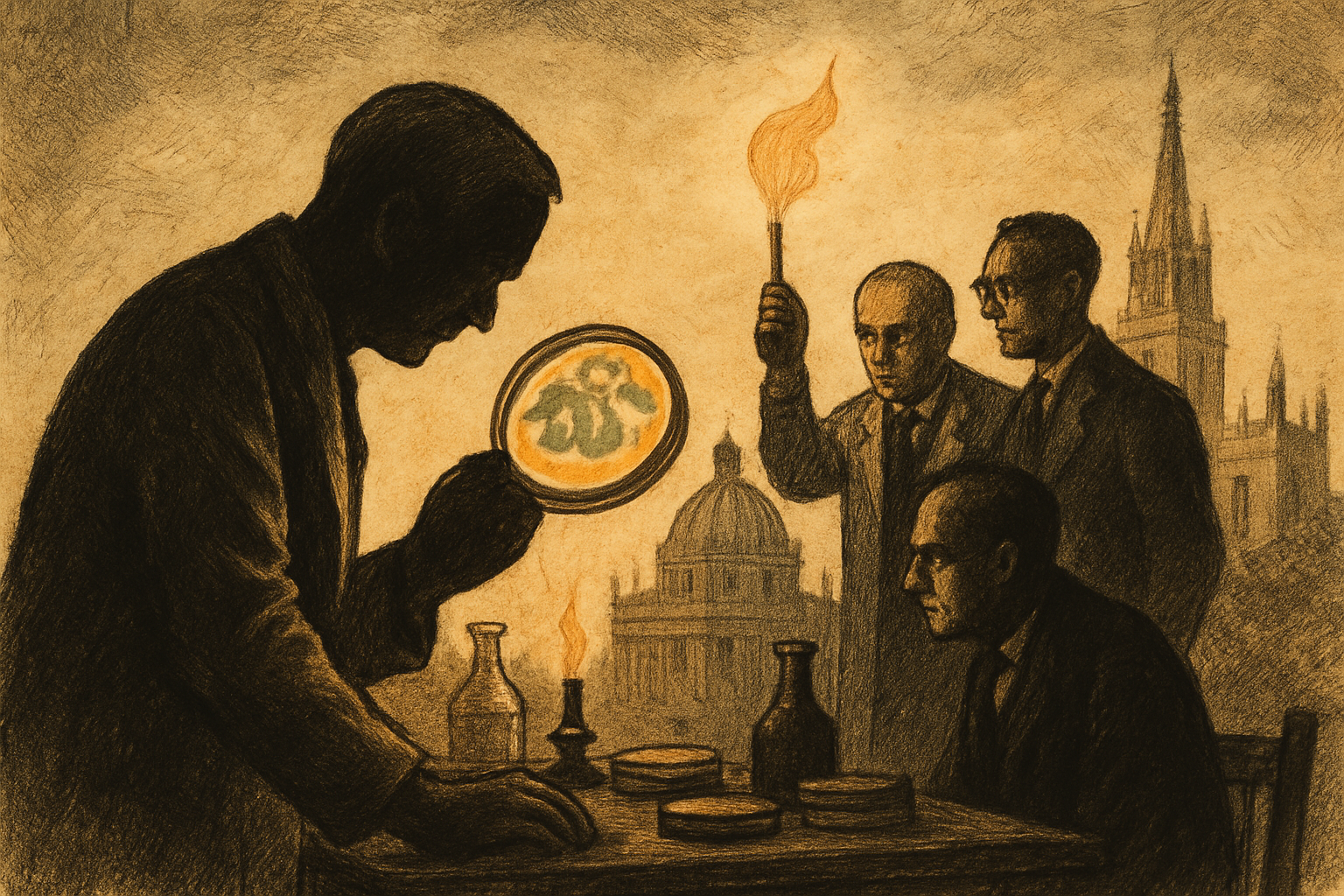
The Mold that Changed Medicine
On a forgotten Petri dish, a thin layer of mold was destroying bacteria in Fleming's lab. What he didn't know yet was that this simple mold would change the world.
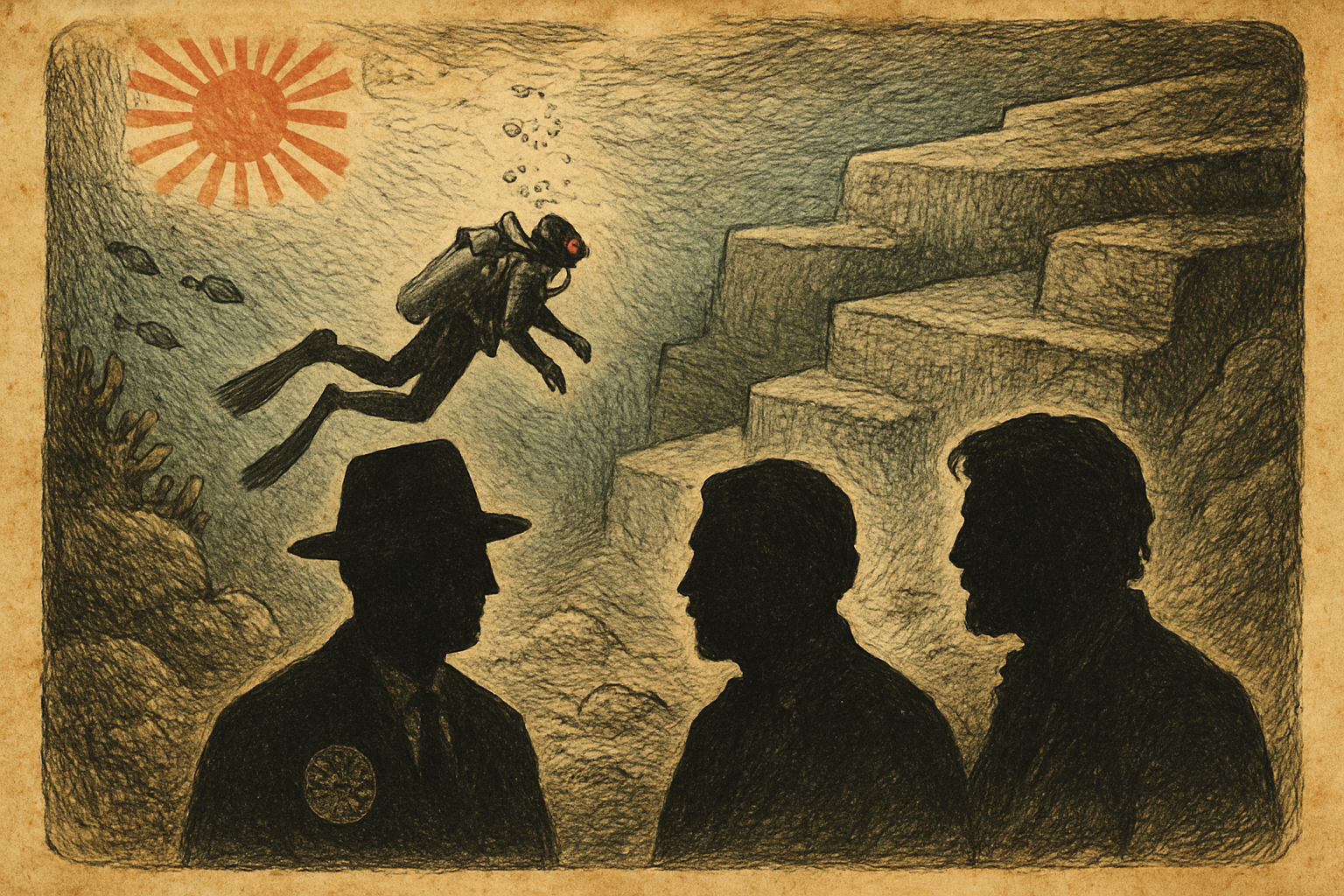
The Mystery Beneath the Waves
In 1986, off the coast of Yonaguni Island, diver Kihachiro Aratake stumbled upon massive underwater structures that challenged our understanding of history. What lies beneath the surface are formations either carved by nature's hand or shaped by ancient humans.
Continue the Rabbit Hole
Each story explores the same idea from a different angle. Follow the connections and discover where the thread leads.




Fictional placeholder content